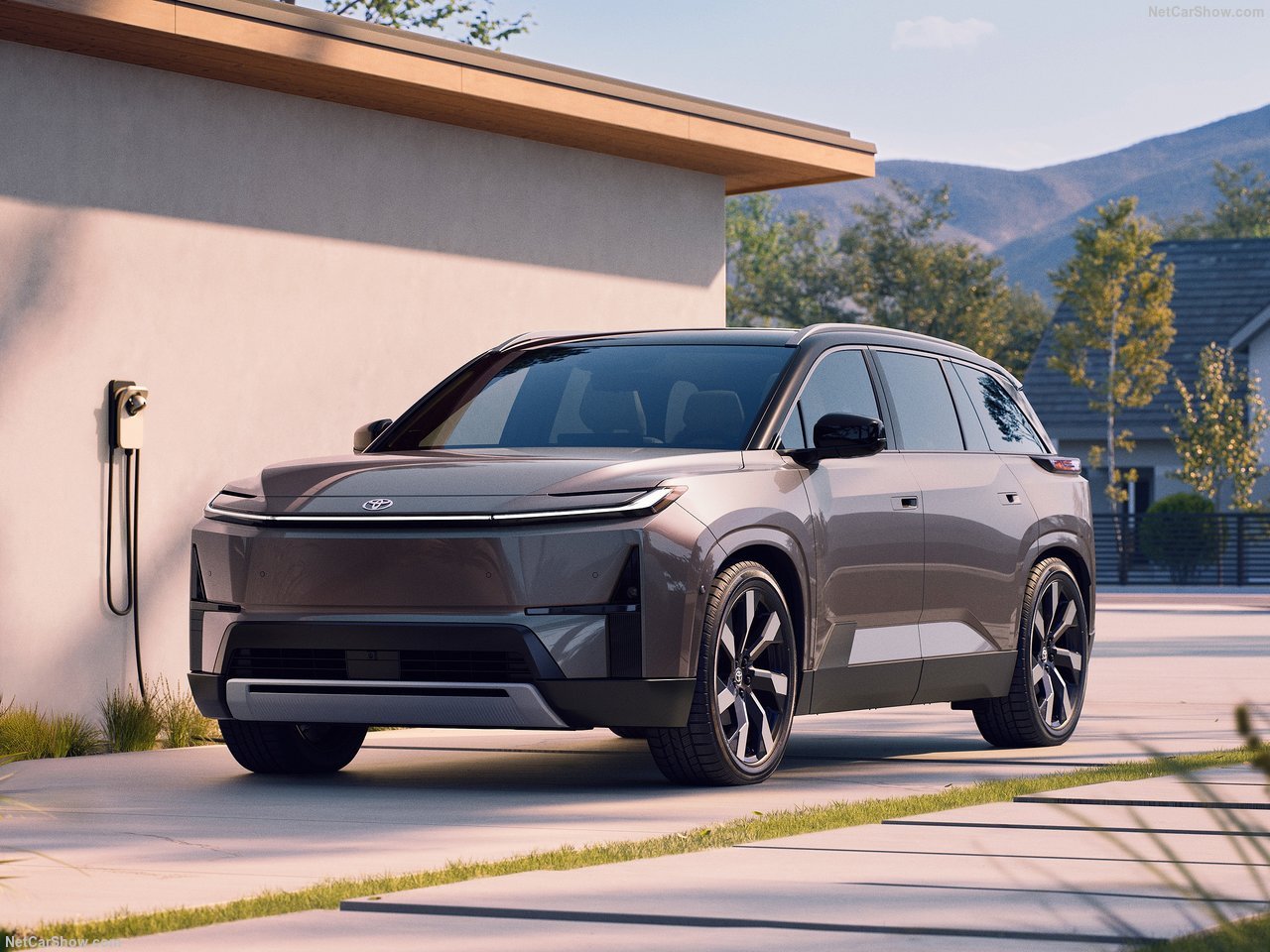
The Toyota Highlander enters an entirely new era for 2027. The familiar three-row family vehicle has been completely reimagined as a battery-electric SUV, becoming Toyota’s first three-row battery-electric vehicle in North America. It combines zero-emission driving with the passenger capacity, cargo versatility and everyday comfort that have long defined the Highlander.
For Canadian families considering the transition to an electric vehicle, the 2027 Highlander EV represents an important addition to the market. Here are five key things prospective owners should know.
1. It is an electric Highlander from the ground up
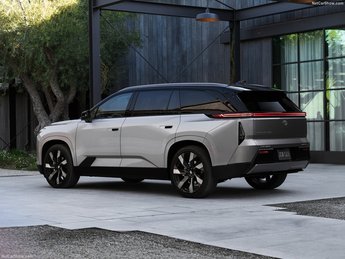
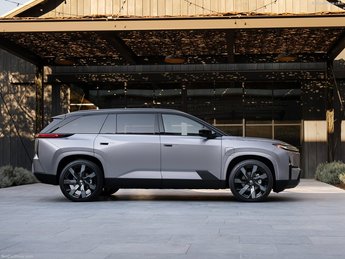
The 2027 Highlander is not simply an electric version of the previous SUV. Its clean lines, broad fenders, full-width LED daytime running lights and flush door handles introduce a distinctly modern design with an emphasis on aerodynamic efficiency.
Every Canadian model will use a battery-electric powertrain. Toyota will offer three grades: XLE, XLE Premium and Limited. The XLE will be available with front-wheel drive or electronic all-wheel drive, while the XLE Premium and Limited will feature all-wheel drive as standard equipment.
The available configurations include:
- XLE FWD with a 77.0-kWh battery
- XLE AWD with a choice of 77.0- or 95.8-kWh batteries
- XLE Premium AWD with a 95.8-kWh battery
- Limited AWD with a 95.8-kWh battery
This range of configurations will let drivers prioritize affordability, driving range, traction or additional comfort features.
2. Driving range can exceed 500 kilometres
Toyota estimates that the XLE AWD equipped with the larger 95.8-kWh battery will offer up to 511 kilometres of total driving range. That is enough to make the Highlander practical for far more than short urban trips, particularly when combined with home charging.
Toyota has not yet published Canadian range figures for every battery and drivetrain combination. The company has confirmed, however, that the Highlander will use a North American Charging System, or NACS, port, providing access to a broad network of compatible DC fast-charging stations. Official charging-time estimates will be announced later.
| Confirmed Canadian specification | 2027 Highlander EV |
| Seating capacity | Up to 7 |
| Available batteries | 77.0 or 95.8 kWh |
| Maximum estimated range | 511 km |
| FWD output | 221 hp |
| AWD output | 338 hp |
| Cargo room with third row folded | 1,290 L |
| Charging connection | NACS |
| Canadian grades | XLE, XLE Premium, Limited |
3. All-wheel-drive models deliver substantial performance
The front-wheel-drive XLE produces 221 combined system horsepower and 198 lb-ft of maximum motor torque. All-wheel-drive versions increase output to 338 combined horsepower, supported by 198 lb-ft of front-motor torque and 125 lb-ft from the rear motor.
Electric motors provide their response without waiting for an engine or transmission to build speed. The result should be smooth, immediate acceleration that is well suited to merging, passing and moving a fully occupied SUV.
AWD models will also include Multi-Terrain Select and Crawl Control. These technologies give the Highlander additional capability when travelling over loose, uneven or slippery surfaces, an especially relevant benefit for Canadian weather and recreational travel.
4. It remains a genuine three-row family vehicle
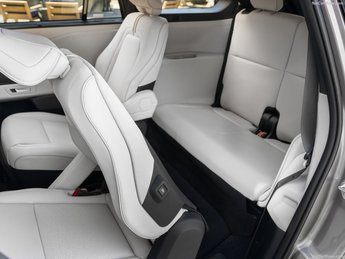
Electrification has not changed the Highlander’s central purpose. The cabin will accommodate up to seven people when equipped with the available second-row bench seat, while the third row can be folded to provide 1,290 litres of rear cargo capacity.
Standard SofTex-trimmed seating, heated front seats, soft-touch interior materials and customizable ambient lighting give the cabin an upscale foundation. Depending on the grade, buyers will also be able to add ventilated front seats, heated second-row seats and Toyota’s largest available fixed panoramic glass roof.
Technology is equally prominent. Confirmed highlights include:
- A 14-inch Toyota Multimedia touchscreen
- A 12.3-inch digital driver display
- Device-charging provisions in every row
- Customizable ambient cabin lighting
- Standard Toyota Safety Sense 4.0
This combination makes the Highlander EV relevant for school runs and commuting while retaining the space required for family trips.
5. It can supply electricity outside the vehicle
The 2027 Highlander introduces Vehicle-to-Load technology to a Toyota model in North America. With the required bidirectional accessories, the vehicle’s battery can supply power to compatible external devices.
That capability could prove useful at a campsite, an outdoor event or during an electrical outage. It expands the value of the battery beyond transportation and gives families another practical reason to keep the Highlander charged.
The new model will also be assembled in Georgetown, Kentucky, making it Toyota’s first North American-built battery-electric vehicle. Its batteries will come from Toyota’s battery facility in North Carolina and a supplier partner.
The all-new 2027 Toyota Highlander EV brings together three-row practicality, available all-wheel drive, up to 338 horsepower and more than 500 kilometres of estimated range. Regency Toyota customers interested in an electric family SUV can contact the dealership for updates on Canadian availability, final specifications and ordering information.